Precon… What is it and Why it Matters?
What Is Preconstruction, and Why Does It Matter?
When most people think about a construction project, they picture the exciting part: walls coming down, framing going up, concrete being poured, walls being built, cabinets being installed, and the finished space coming together.
But before any of that happens, there is an important phase that sets the entire project up for success.
That phase is called preconstruction.
At Black & Alm Construction, we believe preconstruction is one of the most important parts of any residential or commercial construction project. Whether you are remodeling an existing space or building something from the ground up, preconstruction is where expectations are clarified, budgets are reviewed, schedules are planned, and potential problems are identified before they become expensive surprises.
What Is Preconstruction?
Preconstruction is the planning and preparation stage that happens before construction begins.
This is the time when the contractor, customer, designers, architects, engineers, subcontractors, suppliers, and sometimes municipalities work together to understand the full scope of the project. The goal is to make sure everyone is working from the same plan before materials are ordered, permits are pulled, and crews show up on site.
In simple terms, preconstruction answers the big questions:
What exactly are we building?
How much will it cost?
How long will it take?
What decisions need to be made before construction starts?
What potential issues do we need to solve now instead of later?
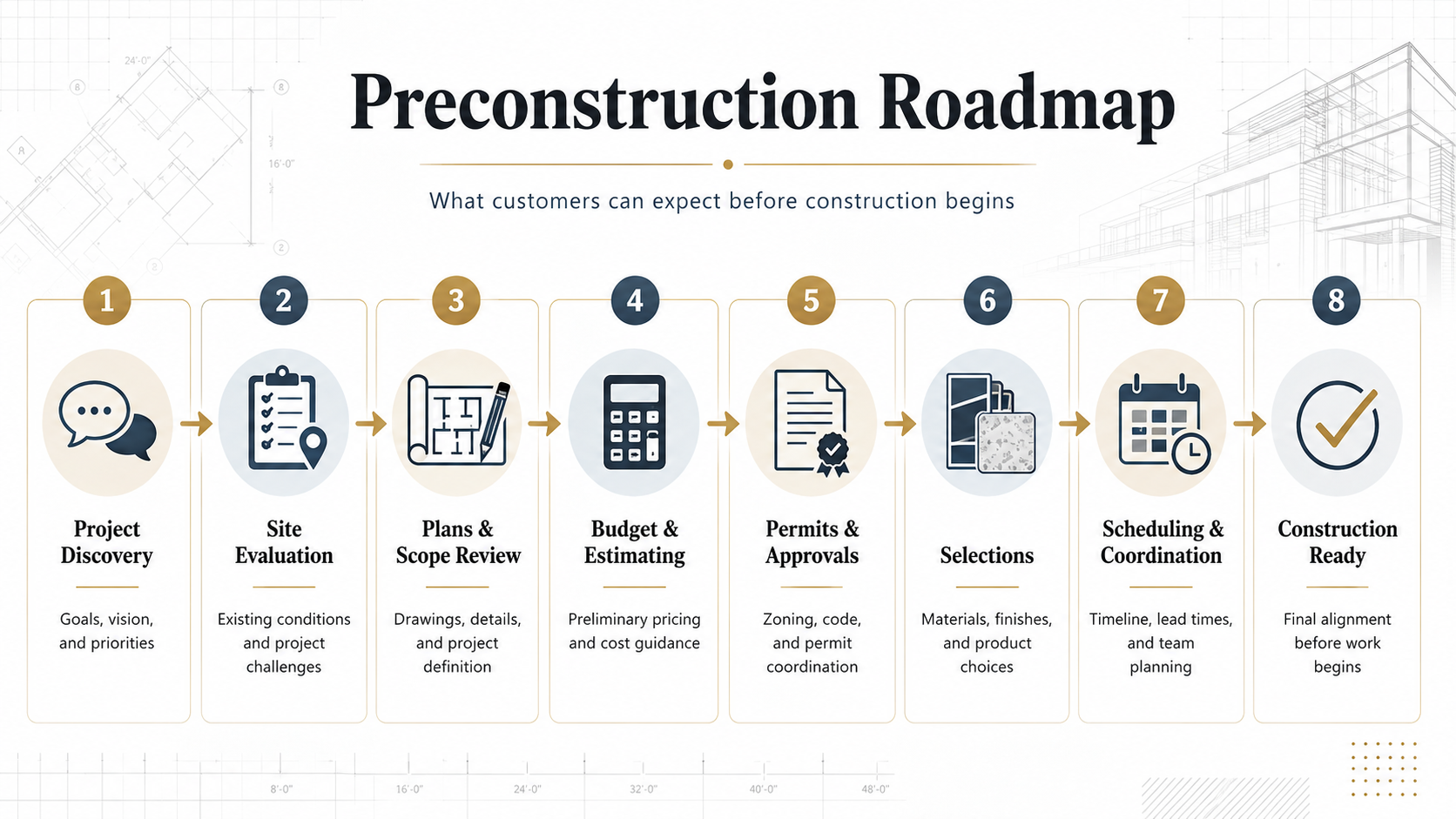
Preconstruction gives the customer a clearer picture of the project before committing to the full construction phase.
Preconstruction for Remodels and Renovations
For remodels and renovations, preconstruction focuses heavily on the existing structure.
This may include reviewing current conditions, understanding what needs to be removed, identifying structural concerns, checking plumbing and electrical locations, reviewing HVAC needs, and determining how the new work will tie into the existing building.
Remodeling often comes with unknowns. Walls, floors, ceilings, crawlspaces, attics, and older systems can hide issues that are not obvious at first glance. While no one can uncover every unknown before demolition begins, a strong preconstruction process helps reduce surprises and gives the customer a better understanding of what may be involved.
For example, a kitchen remodel may require more than cabinets and countertops. It may involve electrical upgrades, plumbing changes, flooring transitions, structural work, or layout changes. Preconstruction helps identify those items early so the project can be planned properly.
Preconstruction for Ground-Up Construction
Ground-up construction has its own set of preconstruction needs.
When a project is being built from the ground up, preconstruction starts before there is anything physical to remodel. The focus shifts to the land, site conditions, design, utilities, permitting, budgeting, and the full building process from start to finish.
This phase may include reviewing the property, understanding zoning requirements, evaluating site access, discussing grading and drainage, locating utilities, reviewing foundation requirements, coordinating with architects and engineers, and building a realistic project budget and schedule.
For ground-up projects, preconstruction helps answer questions such as:
Is the property suitable for the building?
Are there zoning or setback requirements?
Will the site need clearing, grading, or drainage work?
Where will utilities come from?
What type of foundation is needed?
Are there soil, slope, stormwater, or access issues?
What permits and approvals are required?
What design decisions need to be made before pricing can be finalized?
These questions matter because ground-up construction involves more than just the building itself. The site can have a major impact on cost and schedule.
For example, a new commercial building or custom home may require site preparation, utility connections, stormwater planning, parking considerations, accessibility requirements, retaining walls, septic or sewer coordination, and inspections from multiple agencies.
If these items are not reviewed early, they can create delays, budget increases, or design changes later.
Ground-up preconstruction helps customers understand the entire project, not just the visible building. It creates a plan for how the project will move from raw land or an empty lot to a completed structure.
What Customers Can Expect During Preconstruction
Every project is different, but most preconstruction phases include several important steps.
1. Project Discovery
The first step is understanding your goals.
This may include discussing what you want to build or remodel, why you want to do it, what problems you are trying to solve, and what matters most to you. Some customers are focused on budget. Others are focused on design, schedule, functionality, or minimizing disruption.
This is also the time to talk through your priorities. For example, if you are remodeling a kitchen, we may discuss how your family uses the space, what layout problems exist, what style you like, and what features are most important.
For a ground-up project, discovery may include discussing the intended use of the building, the size, layout, parking needs, site requirements, future growth, and long-term goals for the property.
The better we understand your goals, the better we can help guide the project.
2. Reviewing Plans, Drawings, and Scope
If you already have drawings from an architect or designer, those plans are reviewed carefully. If you do not have plans yet, preconstruction may help determine what design work is needed.
This step helps define the scope of work. Scope is a detailed description of what is included in the project.
For example, a bathroom remodel may include demolition, framing, plumbing, electrical, tile, cabinetry, countertops, fixtures, paint, and final cleanup.
A ground-up project may include site clearing, grading, foundation work, framing, roofing, windows, doors, mechanical systems, electrical, plumbing, insulation, drywall, finishes, exterior work, sidewalks, parking areas, landscaping, and final inspections.
Each part of the scope needs to be reviewed so the estimate is based on real information instead of guesswork.
Clear scope helps prevent misunderstandings later.
3. Budget Planning and Cost Review
One of the biggest reasons preconstruction matters is budget clarity.
During this phase, the contractor works to develop pricing based on the plans, scope, material selections, subcontractor input, site conditions, and current market conditions.
This is not just about giving a customer a number. It is about helping the customer understand where the money is going.
Preconstruction can identify cost drivers such as structural work, mechanical systems, custom finishes, cabinetry, site work, utility connections, foundation requirements, stormwater requirements, or long-lead materials. It can also reveal areas where the customer may be able to save money without hurting the quality or purpose of the project.
A good preconstruction process helps reduce the chances of major budget surprises after construction begins.
4. Site Evaluation
The physical job site matters.
During preconstruction, the contractor may visit the site to review existing conditions. This can include access, parking, utilities, drainage, structural concerns, existing walls, electrical panels, plumbing locations, crawlspaces, attics, or other conditions that may affect the project.
For remodels, this step is especially important because existing buildings often come with unknowns.
For ground-up construction, site evaluation is even more critical. The site may need to be reviewed for grading, slope, drainage, soil conditions, driveway access, equipment access, utility availability, retaining walls, septic or sewer connections, and stormwater requirements.
Some site-related issues can significantly affect the budget and schedule, so identifying them early is a major part of responsible planning.
5. Subcontractor and Supplier Input
Construction projects usually involve multiple trades, including electricians, plumbers, HVAC contractors, framers, painters, roofers, cabinet suppliers, countertop fabricators, sitework contractors, concrete contractors, and others.
During preconstruction, trusted subcontractors and suppliers may be asked to review the project and provide pricing, recommendations, or scheduling information.
This helps create a more accurate estimate and a more realistic schedule.
It also helps identify coordination issues before construction starts. For example, cabinetry may affect plumbing locations, electrical layout may affect lighting placement, HVAC requirements may affect framing, and utility locations may affect site layout.
The earlier these conversations happen, the smoother the project usually goes.
6. Schedule Planning
Customers naturally want to know how long their project will take.
Preconstruction helps establish a realistic project schedule. This includes reviewing the order of work, lead times for materials, permitting requirements, subcontractor availability, inspections, site preparation, utility coordination, and major milestones.
Some materials, such as cabinets, windows, doors, specialty fixtures, steel, trusses, electrical gear, or custom items, may need to be ordered well in advance. Identifying those items early can prevent delays once construction begins.
A good schedule is not just a start date and finish date. It is a plan for how the project will move from one phase to the next.
7. Permits, Zoning, and Code Requirements
Many projects require permits, inspections, or code review. During preconstruction, the contractor helps determine what permits may be needed and what code requirements could affect the work.
For ground-up construction, this may also include zoning, setbacks, site plan approval, stormwater requirements, driveway permits, utility approvals, septic or sewer approval, and accessibility requirements.
This is important because permitting and code issues can impact design, cost, and schedule.
For example, structural changes, electrical upgrades, plumbing changes, accessibility requirements, fire protection, zoning rules, or stormwater requirements may all need to be considered before the project begins.
Handling these items early helps avoid delays and costly changes later.
8. Material and Finish Selections
Many customers are surprised by how many decisions need to be made before construction starts.
Depending on the project, selections may include flooring, tile, cabinets, countertops, plumbing fixtures, appliances, lighting, paint colors, doors, hardware, siding, roofing, windows, exterior finishes, and more.
Preconstruction helps organize those decisions. It also helps connect selections to budget and schedule.
For example, choosing a tile that is readily available may keep the project moving, while choosing a special-order product may require additional lead time. Making decisions early helps avoid delays and last-minute pressure.
Why Preconstruction Is Important:
Preconstruction is not just paperwork. It is protection for the customer and the project.
Here is why it matters.
It Helps Control the Budget
No contractor can eliminate every unknown, especially in remodeling or site work, but preconstruction creates a much clearer financial picture before work begins.
By reviewing plans, site conditions, materials, subcontractor pricing, permitting needs, and project scope, the customer gets a more informed budget. This helps reduce unexpected costs and gives the customer the opportunity to make adjustments before construction starts.
It Reduces Surprises
Construction projects involve many moving parts. Without proper planning, small details can become big problems.
Preconstruction helps identify issues early, such as missing information in plans, material delays, structural concerns, utility conflicts, unclear scope, site problems, zoning concerns, or permitting requirements.
Solving these issues before construction begins is usually faster, cheaper, and less stressful than solving them in the middle of the job.
It Creates Clear Expectations
A successful project depends on clear communication.
During preconstruction, the customer and contractor can discuss budget, schedule, access, work hours, communication expectations, material selections, change orders, job site logistics, permitting, and project milestones.
When expectations are clear from the beginning, the project is more likely to run smoothly.
It Improves the Schedule
Delays often happen when decisions are not made early enough, materials are not ordered on time, permits are not ready, or subcontractors are not properly coordinated.
Preconstruction helps create a realistic schedule and identifies long-lead items before they hold up the job.
This does not mean every project will be perfect or that delays can never happen, but it does give the project a much stronger foundation.
It Helps Customers Make Better Decisions
Preconstruction gives customers the information they need to make smart decisions.
Instead of guessing, customers can compare options, understand cost impacts, review priorities, and decide where to invest their money.
For example, a customer may decide to spend more on custom cabinetry but save money on flooring. Another customer may choose to simplify part of the design to stay within budget. For a ground-up project, a customer may decide to adjust the building layout, site plan, or finish level after seeing how those choices affect the total budget.
Good decisions come from good information.
Is Preconstruction Worth It?
Yes. Preconstruction is worth it because it helps protect your investment.
A construction project is a major commitment. Whether you are remodeling a kitchen, building an addition, renovating a commercial space, or constructing a new building from the ground up, the decisions made before construction begins have a major impact on the final result.
Skipping preconstruction may seem like it saves time, but it often leads to more confusion, more change orders, more delays, and more stress once work begins.
Preconstruction gives you a roadmap.
It helps define the project, clarify the budget, organize the schedule, review the site, coordinate the team, and create a plan that everyone can follow.
Final Thoughts
At Black & Alm Construction, we want our customers to feel informed and confident before construction starts.
Preconstruction is how we get there.
It is the phase where we slow down, ask the right questions, review the details, and build a plan that supports a better construction experience.
A successful project does not start on demolition day, and it does not start when the first shovel hits the ground.
It starts with planning.
And that is exactly what preconstruction is designed to do.